🌸 The Core of Balance in Arabesque: Finding Strength Within
Question:
What are the core muscles engaged in maintaining balance in arabesque?
A) Abdominals, back, and glute muscles ✅
B) Calves and finger muscles ❌
Think Tip 💭:
Imagine your core as a strong pillar—pull up through your abdominals while lengthening your spine. Your glutes stabilize the lifted leg, and your back muscles keep the upper body gracefully extended. Balance comes from strength within, not just the leg you’re standing on.
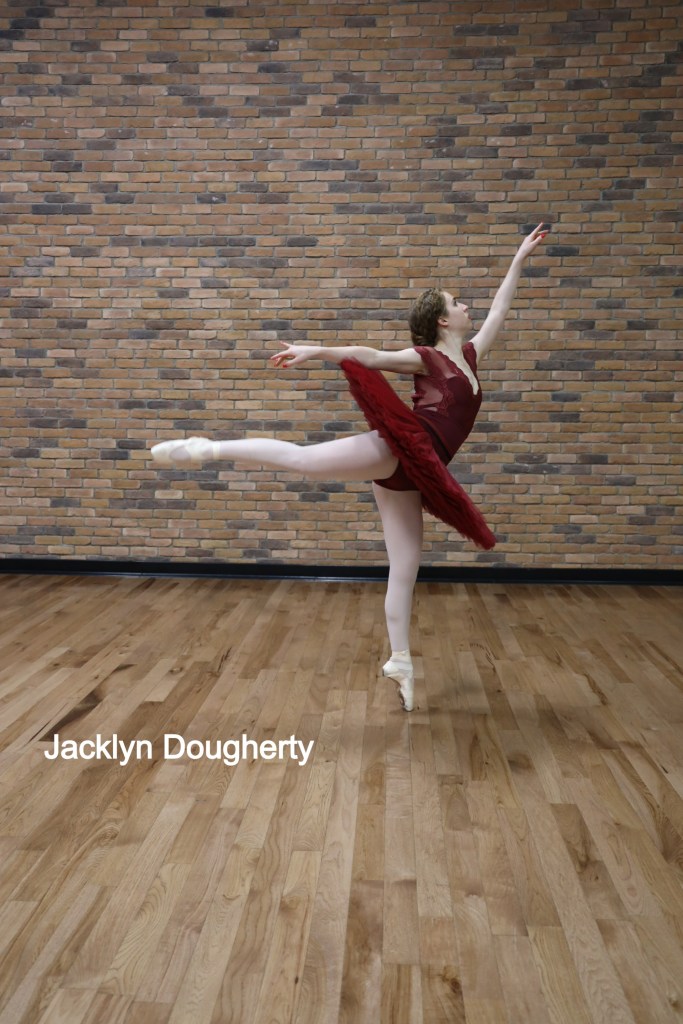
The arabesque is one of ballet’s most iconic positions—a breathtaking line of strength, grace, and beauty. Yet behind its effortless appearance lies a deep physical and mental connection between balance, alignment, and control. Maintaining balance in arabesque requires far more than elegant posture or leg height. It begins at the very center of the body: the core.
In classical ballet, the core acts as the dancer’s powerhouse, stabilizing every extension, turn, and lift. When performing an arabesque, this central strength connects the supporting leg to the lifted one, allowing the dancer to create the illusion of floating stillness. Let’s explore the essential muscles that work together to make this position possible—and how dancers can use awareness and “think tips” to refine their balance.
1. The True Core: Abdominals, Back, and Glutes
The correct answer to the quiz question is A) Abdominals, back, and glute muscles. These form the triad of balance in an arabesque.
The abdominal muscles—including the transverse abdominis and obliques—act like a corset wrapping around the torso. They support the spine and prevent the lower back from arching excessively as the leg lifts behind. Engaging these muscles helps maintain control without tension, allowing the dancer to sustain the pose gracefully.
Behind the body, the back muscles—especially the erector spinae and latissimus dorsi—extend the upper body and create the long, lifted line from fingertip to toe. These muscles counterbalance the lifted leg, helping the dancer avoid tipping forward.
Finally, the gluteal muscles play a vital role in both lifting and stabilizing the working leg. The gluteus maximus extends the leg behind the body, while the smaller glute muscles assist with maintaining turnout and preventing the pelvis from rotating. Together, they provide the power behind the arabesque’s elegance.
2. The Common Misconception
The wrong answer—B) Calves and finger muscles—illustrates a common misunderstanding. While these muscles are engaged for support and expression, they do not drive the balance. The calves help maintain a strong relevé, and the arms express artistry through the fingertips, but without a stable core, the position would collapse.
Dancers often focus on lifting the leg or extending the arms without realizing that true steadiness originates deeper. The visible movement is only the result of inner stability. That’s why professional dancers spend countless hours building core awareness at the barre, where alignment and muscle memory begin.
3. The Think Tip 💭
Think: “Lift from the center, lengthen through the spine.”
Before extending into arabesque, imagine drawing your navel gently toward your spine and lengthening your back upward. Feel as if a string lifts you from the crown of your head while your supporting leg roots firmly into the floor. The energy of the lifted leg should stretch behind you without pulling your torso off balance.
A helpful visualization: picture your core as a glowing center of light. Every movement radiates from this point—forward through the chest, upward through the head, and backward through the leg. When you connect these directions, your arabesque becomes both grounded and ethereal.
4. Integrating Balance and Breath
Breath is the secret partner of balance. Holding your breath tightens the body and interrupts natural control. Instead, inhale to lengthen and exhale to settle into your position. The breath stabilizes your core while releasing unnecessary tension in your shoulders and neck.
Remember that balance is dynamic—it’s never completely still. Tiny adjustments happen constantly through your core and standing leg. Allow those micro-movements to flow naturally, using your breath as your internal rhythm.
5. The Art of Effortless Strength
Mastering arabesque is a lifelong practice of harmony between strength and softness. The beauty of the position lies not in how high the leg lifts but in how seamlessly the dancer connects every part of the body. When the core, back, and glutes unite, the dancer creates the illusion of defying gravity.
So next time you rise into arabesque, remember this: your balance doesn’t come from the floor—it begins from within.
Much Love,
Jacklyn Dougherty and Dr. Joni Dougherty
Visit JacklynDougherty.com for more ballet insights, training guides, and complete Cecchetti resources.